
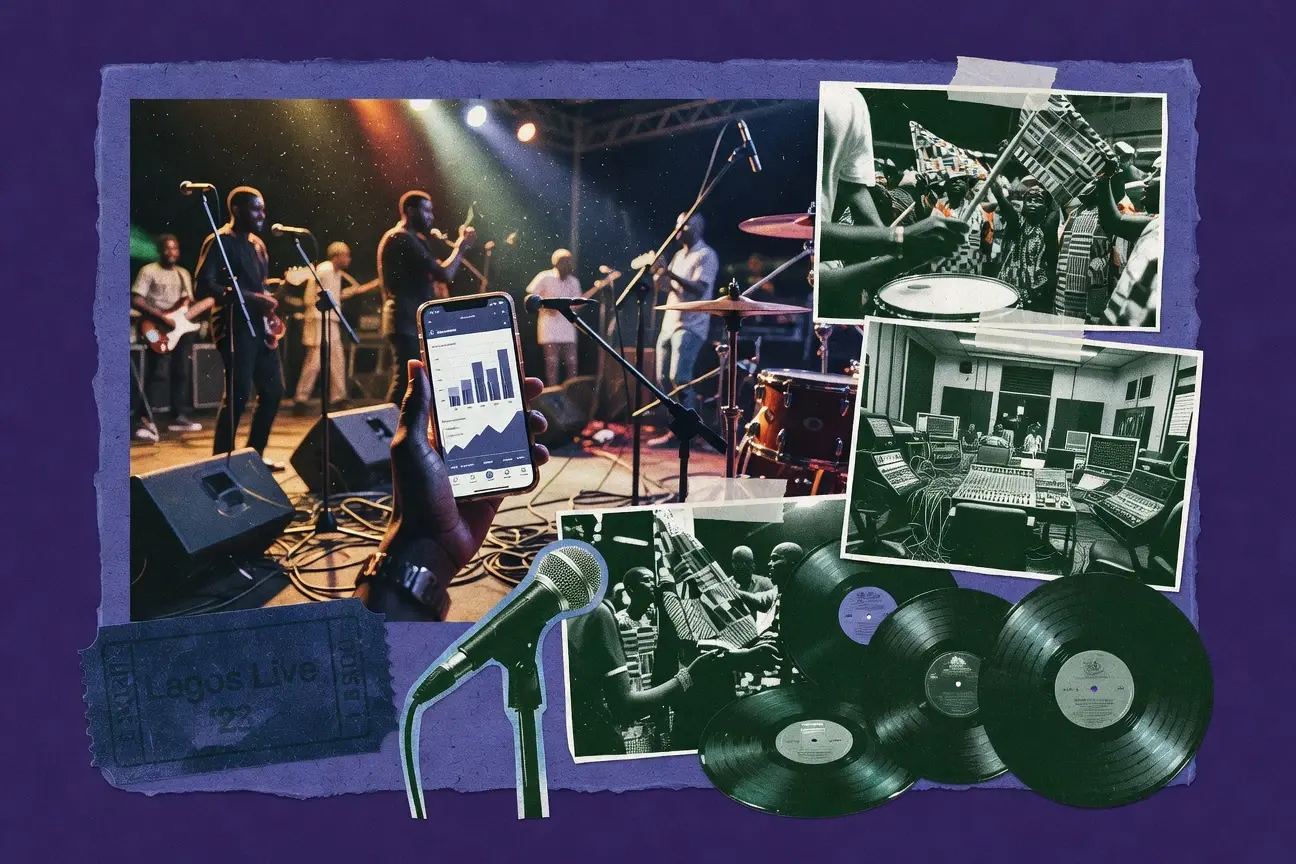
Africa's Music Boom: The Global Revenue Is Real, but Who's Actually Cashing In?
Sub-Saharan Africa's recorded music revenue hit $120 million in 2025, growing 15.2% year-over-year—making it one of the fastest-growing music regions on the planet. Globally, recorded music revenues crossed $31.7 billion, with streaming now accounting for nearly 70% of all revenue. Afrobeats alone has grown 550% in a decade, generating over 14 billion streams in a single year.
The numbers are undeniably exciting. But here's the question that should be keeping every African music stakeholder up at night: who is actually keeping the money?
The Boom Is Real—But So Is the Leak
A Harvard University report released in late 2025 delivered a sobering verdict. Afrobeats generated roughly $100 million globally in 2023, yet only a tiny fraction of that income reached African creators. The report, produced by Harvard's Centre for African Societies and Economies, found that Africa remains the world's lowest royalty-collecting region, even as consumption across the continent continues to surge.
Professor Olufunmilayo Arewa, who authored the report, put it bluntly: "Afrobeats is a historic triumph of African creativity, but structurally, the global boom is generating income almost everywhere except Africa".

How does this happen? The answer lies in the architecture of the global music industry. Distribution, data, royalties, metadata, and intellectual property norms are controlled by a handful of global players—Universal, Sony, Warner, Spotify, YouTube, and TikTok among them. African artists typically enter this system from a position of weaker bargaining power, limited legal resources, and little control over downstream monetisation.
As one industry analysis put it: "African culture is created locally, but ownership is often determined by where the systems that structure, distribute, and monetize it are based".
The Infrastructure Gap
The leakage isn't accidental. It's structural—and it starts with infrastructure gaps that Africa has yet to close:

Publishing and royalty collection systems remain inconsistent across the continent, leading to lost or uncollected royalties. Many African artists and labels lack the legal infrastructure and regulatory protections to negotiate favourable contracts, often signing deals that transfer long-term profits abroad.
Data and metadata infrastructure is weak. Missing ISRC codes, fragmented ownership documentation, and underdeveloped collective management systems mean that even when royalties are generated, they frequently cannot be tracked back to their rightful owners.
Investment in music technology is still low, slowing the development of local tools for data, rights management, and monetization.
The result? A song can emerge from Lagos or Johannesburg, rack up hundreds of millions of streams across Europe and North America, and still see only a fraction of its revenue return to the originating market. As one analysis noted: "The culture travels, but the system that supports it is anchored elsewhere, and that is where most of the value stays".
The Investment Opportunity: Build the Infrastructure, Keep the Value
Here's where the narrative shifts from problem to opportunity. The same Harvard report that diagnosed the leakage also outlined a clear path forward. Among its five priority policy actions: strengthening local financial and business ecosystems, building robust African touring and live-performance markets, and establishing African-centred intellectual property and contracting models.

For investors, the message is equally clear. There are several high-impact areas where capital can help turn streams into permanent local enterprise assets:
- Rights Management and Royalty Collection Technology Funding for local royalty collection systems and rights management platforms would ensure that revenue generated by African music is tracked, collected, and distributed within Africa. The World Intellectual Property Organization has repeatedly pointed to weak documentation and fragmented ownership as critical gaps—gaps that technology can help close.
- Local Labels, Publishing, and Artist Development Strategic investment in talent incubation, record labels, and publishing companies builds the infrastructure needed to develop and retain African stars. The success of Mavin Records—which built a powerhouse through strategic artist development—demonstrates what's possible when local capital backs local talent.
- Live Events and Touring Infrastructure Live performance and touring have become central income streams in the streaming era. Developing world-class venues, festivals, and touring infrastructure across the continent would capture value that currently flows to international promoters and venues.
- Music Technology and Data Analytics Local tools for data collection, revenue tracking, and rights management would give African artists and labels the visibility they need to claim what they're owed. Improved data would also support evidence-based decision-making by governments, investors, and policymakers.
The Ownership Question
At the heart of this moment is a simple but profound question: will Africa own the business behind its cultural exports?
Obi Asika, Director-General of Nigeria's National Council for Arts and Culture, framed it this way at the BusinessDay Creative Entertainment Summit: "Nigeria does not have a music industry problem per se. But we do have issues with ownership and architecture". He cautioned that many of the assets driving Afrobeats' global success are owned outside Africa, creating a financial imbalance where "the artists who built Afrobeats globally are not its primary financial beneficiaries".
The good news is that this is changing. From pan-African publishing partnerships that connect local talent to global rights management infrastructure, to streaming platforms like Boomplay and Mdundo building localised services for African audiences, the foundations are being laid. But the pace must accelerate.
The Call to Action
Africa's music moment is not a passing trend. The continent's total creative economy is projected to hit $200 billion by 2030. Governments are beginning to recognise the sector's economic potential—Kenya, for instance, recently allocated Ksh. 8.6 billion to accelerate digital transformation and support the creative economy.
But government policy alone won't close the gap. Private capital must step in to build the infrastructure that ensures royalties and economic value stay on the continent. The question is no longer whether Africa can produce world-class music. That's already been answered. The question is whether Africa will build the systems to profit from it.
As the Harvard report's organisers put it: "The world is already dancing to African music. The question is whether Africa will build the systems to profit from it".
The streams are flowing. The infrastructure needs to follow.